
How many tons does a 20 yard dumpster hold?
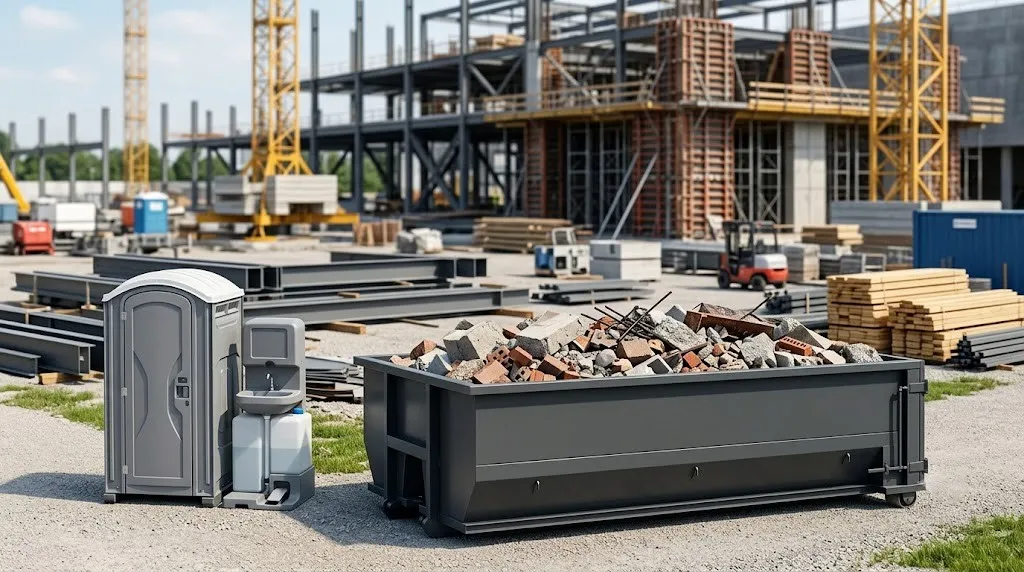
Most 20 yard containers on a 10 yard dumpster rental or 20 yard job site are rated for 2 to 3 tons of mixed debris, though the box itself is far lighter empty. An empty 20 yard dumpster generally weighs somewhere in the 2,000 to 3,000 pound range before anything goes in, which matters because that dead weight gets subtracted from the truck's scale reading when the driver figures your final bill. Rancho Cordova homeowners clearing out a garage or finishing a kitchen remodel usually land well under the ton limit with household junk. The trouble starts with dense material. Concrete, brick, dirt and roofing shingles pack a lot of weight into a small footprint, and a half-full dumpster of shingles can outweigh a completely full one of cardboard and furniture. If you are not sure what your project will generate, dumpster sizes and dimensions walks through the footprint and yardage for each size, and dumpster rental cost breaks down what overage fees look like when a load runs heavy. Check what cannot go in a dumpster before you load, since some heavy materials are restricted outright regardless of tonnage.
How many tons does a 30 yard dumpster hold?
A 30 yard dumpster generally carries a 3 to 4 ton limit, which covers most whole-house cleanouts, roofing tear-offs and mid-size renovation debris without tipping into overage charges. That range holds whether you are pulling a 30 yard dumpster rental for a Rancho Cordova remodel or a commercial strip-out job. The weight limit is set by the hauler and by axle limits on the truck hauling it, not by the box size alone. A 30 yard box full of insulation and drywall scraps might weigh a fraction of a 30 yard box full of tile and mortar. That is why the same yardage question gets two different tonnage answers depending on what is going in. For construction sites running heavier debris streams alongside temporary fence rental and storage container rental, it pays to ask upfront what the per-ton overage rate is before the truck ever gets loaded. Anyone comparing a Rancho Cordova job against how the same size box prices out on a roll off dumpster rental job in Dayton, Ohio, or a roll off dumpster rental in San Antonio will find the tonnage math is the same everywhere; local market rates just move the price per ton up or down.
What happens if I go over the weight limit?
Going over the stated tonnage triggers an overage fee, usually billed per ton past the included limit, and it shows up on your invoice after the load gets weighed at the transfer station. This is the most common surprise charge in dumpster rental, and it is avoidable with a little planning. Know what your debris actually weighs before you order. A 40 yard dumpster rental holds more volume than a 30, generally rated in the 4 to 5 ton range, but volume and weight are not the same thing, and a bigger box does not always mean a bigger weight allowance relative to what you are hauling. Construction crews working through construction dumpster rental accounts should also factor in dumpster permit requirements if the box sits in a right of way, since placement rules and weight limits are two separate concerns handled by two separate parts of your rental agreement. Rancho Cordova Porta Pros lists the tonnage included with each size upfront so there is no guessing after the truck is loaded and gone.
How do I know which size fits my project?
Match the size to your heaviest material, not just your cleanout volume, and you will avoid most overage charges before they happen. A garage full of boxes and old furniture rarely challenges a 20 yard limit. A driveway's worth of concrete or a full roof tear-off will challenge even a 30 yard limit fast. How many porta potties do I need is a different math problem entirely, but the same logic applies: match capacity to the actual load, not the container's advertised size. A roll-off delivery needs about 60 feet of straight clearance behind the truck to place the box, so measure your driveway or street frontage before scheduling. If your project runs alongside other site needs, from porta john rental to light tower rental, bundling delivery windows can save a trip charge. For homeowners tackling a single room, home renovation porta potty and a 10 yard box together usually cover it without touching the tonnage ceiling at all.
| unit | duration | low | typical | high |
|---|---|---|---|---|
| dumpster | day | 51 | 75 | 112 |
| dumpster | weekend | 390 | 440 | 497 |
| dumpster | week | 426 | 600 | 778 |
| dumpster | month | 91 | 108 | 500 |
Does concrete count differently than household junk?
Yes. Concrete, brick and dirt are dense and hit tonnage limits fast, while furniture and cardboard are bulky but light. A half-full concrete load can weigh more than a fully packed load of household debris, so ask your hauler about material-specific limits before ordering.
How much does a 20 yard dumpster weigh empty?
An empty 20 yard box generally runs in the 2,000 to 3,000 pound range, and that tare weight gets deducted from the scale ticket at drop-off. It is a fixed number your hauler subtracts, not something you need to track yourself.
Can I mix heavy debris with light debris in one dumpster?
You can, but mixing does not average out the tonnage. If concrete or shingles are in the mix, the load's weight climbs the same way it would with a full heavy load. Separate loads sometimes cost less than one overage-heavy combined load.
Is there a weight difference between a 30 and 40 yard dumpster?
Generally yes. A 30 yard box is typically rated 3 to 4 tons, and a 40 yard box often runs 4 to 5 tons, but always confirm the number on your specific rental agreement rather than assuming by size alone.
Do overage fees apply to every dumpster size?
Overage fees apply whenever the load exceeds the ton limit stated in your contract, regardless of size. A 10 yard box and a 40 yard box both carry a cap; going over either triggers the same per-ton billing structure.
Next step
Get a delivery date
Tell us the address, the dates and the headcount. We size the order and confirm the route.